
Cataracts in children

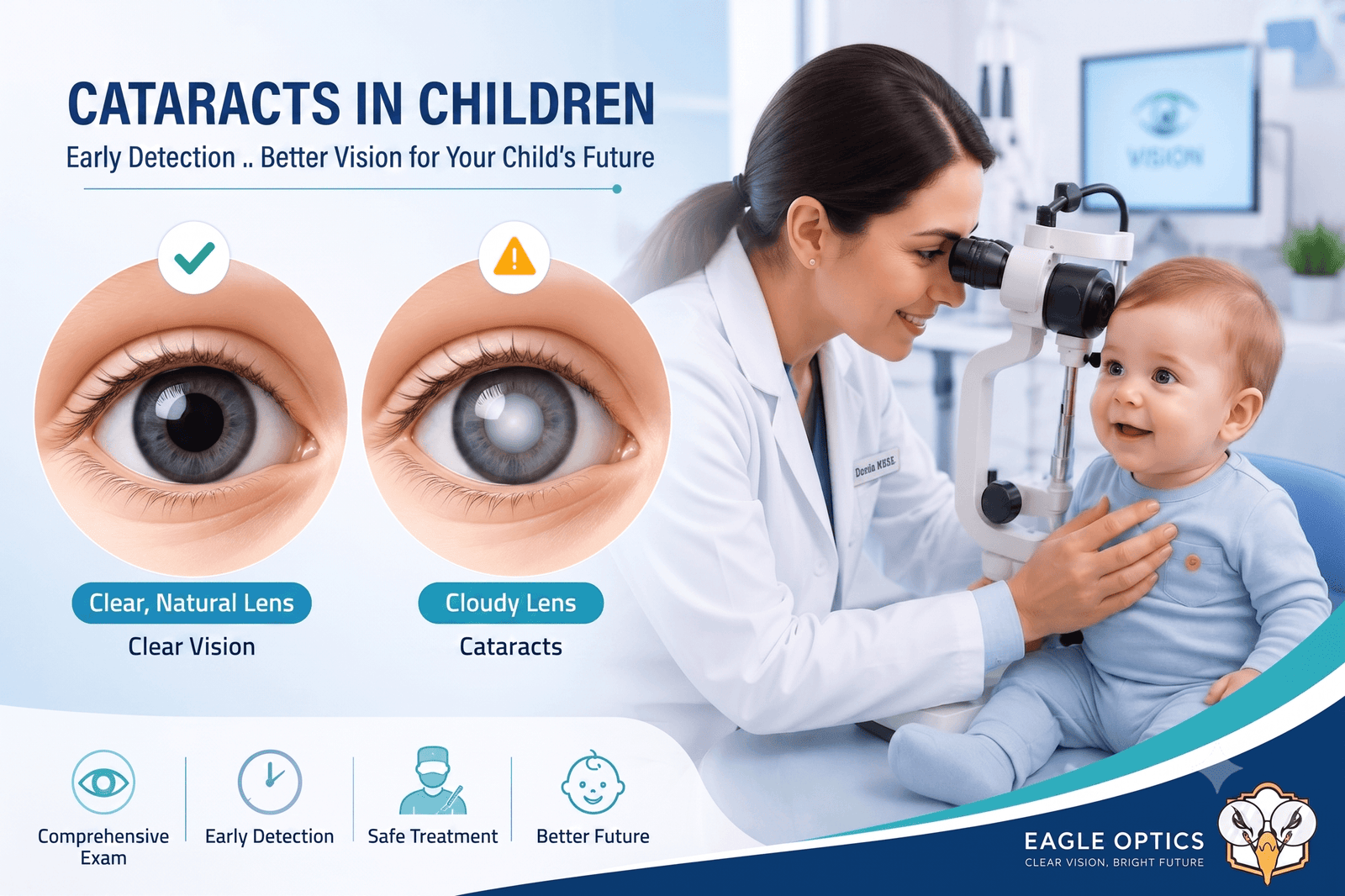
Congenital Cataracts in Infants and Children: Can a Baby Be Born with Cataracts?
Many people believe that cataracts are an eye condition exclusively linked to aging. However, the medical reality is that cataracts in infants and children can be present at birth or develop during the early years of a child's life.
Medically referred to as congenital cataracts when present from birth, this condition occurs due to an opacity or cloudiness in the eye's natural lens. This obstruction prevents light from properly reaching the retina, which directly disrupts the normal development of the child's vision.
What is a Cataract in Children?
A pediatric cataract is the loss of the natural lens's transparency, making vision blurry or distorted. The natural lens works like a camera, focusing light onto the retina at the back of the eye. When the lens becomes cloudy, insufficient light signals reach the retina, resulting in varying degrees of vision impairment.
Why is an Infant Cataract Considered a Medical Emergency?
During the initial months and years of life, the brain actively develops the neural pathways required for vision. When a cataract blocks a clear image from reaching the retina, the brain begins to ignore the distorted signals coming from the affected eye, leading to a condition known as lazy eye (Amblyopia).
For this reason, ophthalmologists treat infant cataracts as an urgent matter that cannot tolerate delays; timing plays a crucial role in preserving the child's lifelong visual capacity.
Causes of Cataracts in Children
While the exact cause remains unknown in many clinical cases, there are several recognized factors responsible for congenital or acquired cataracts in children:
1. Genetic Factors
Hereditary traits are among the most common causes of pediatric cataracts, particularly if there is a known family history of the condition.
2. Infections During Pregnancy
Certain maternal infections during pregnancy can significantly increase the risk of fetal cataracts, such as Rubella (German measles), Toxoplasmosis, Herpes Simplex, and Cytomegalovirus (CMV).
3. Metabolic Disorders
Some inherited metabolic conditions can trigger the early onset of cataracts during infancy or early childhood.
4. Premature Birth
Premature infants (born before their due date) face a higher risk of developing various eye complications, including congenital cataracts.
5. Eye Injuries
In some instances, cataracts can develop following a direct trauma to the eye or as a complication from previous ocular surgeries.
Symptoms of Cataracts in Infants and Children
Since babies and toddlers cannot voice vision problems, parents must be highly vigilant for the following clinical signs:
- A white reflex inside the pupil: A cloudy or white reflection inside the center of the eye (leukocoria) is the classic sign of a congenital cataract.
- Strabismus (Crossed Eyes): The child's eye may turn inward or outward due to poor visual input from the affected eye.
- Nystagmus (Rhythmic shaking): Rapid, involuntary, and unusual shaking movements of the eyes.
- Failure to track moving objects: The baby may not follow toys, objects, or faces moving in front of them.
- Poor visual communication: Lack of eye contact with the mother during feeding is an important warning sign that warrants an immediate exam.
- Extreme light sensitivity: The child may show severe discomfort, squint, or cry when exposed to bright light.
How are Pediatric Cataracts Diagnosed?
Diagnosis relies on a comprehensive and specialized eye examination performed by an ophthalmologist using advanced clinical instruments to evaluate:
- The precise density and location of the lens opacity.
- The direct impact of the cataract on visual development.
- The overall health of the retina and the optic nerve.
- The presence of any co-existing ocular conditions.
In certain scenarios, the physician may order laboratory tests or systemic evaluations to identify the exact underlying medical cause.
When is Cataract Surgery Required for a Child?
Ophthalmologists emphasize that delaying treatment for dense congenital cataracts can lead to irreversible vision loss. In severe cases, surgeons highly recommend performing surgery within the first few weeks of life to clear the visual axis and allow light to stimulate the developing brain.
Treatment Options for Cataracts in Children
The treatment protocol is highly personalized based on the child's age, the severity of the cataract, whether it affects one or both eyes, and its impact on vision. It involves a multi-step management plan:
Surgical Lens Removal
This is the definitive and essential step in most significant cases to open up the pathway for light to reach the retina.
Pediatric Eyeglasses
Prescribed after surgery to help focus images correctly onto the back of the eye, replacing the natural lens's focusing power.
Specialized Contact Lenses
An excellent and highly effective alternative frequently used for very young infants following cataract removal.
Intraocular Lens (IOL) Implantation
A permanent artificial lens can be surgically implanted inside the eye, depending on the child's age and the surgeon's clinical evaluation.
Vision Rehabilitation & Patching
A crucial long-term step that often involves patching the stronger eye to actively stimulate and strengthen the visual pathways in the brain.
Complications of Delayed Cataract Treatment
Congenital cataracts require prompt attention. Postponing necessary intervention can lead to severe permanent consequences:
- Permanent functional amblyopia (lazy eye).
- Irreversible low vision that cannot be corrected later in life.
- Secondary strabismus (crossed eyes) due to the eye's inability to fixate.
- Underdevelopment of the visual cortex in the brain.
- Delays in the child's overall visual, cognitive, and motor skill development.
Can Congenital Cataracts Be Prevented?
While genetic and hereditary cases cannot be prevented, environmental risk factors during pregnancy can be minimized by:
- Maintaining regular and comprehensive prenatal care during pregnancy.
- Ensuring all necessary viral vaccinations are up-to-date before planning a pregnancy.
- Avoiding raw or undercooked meats to protect the mother from parasitic infections.
- Avoiding direct contact with cat litter boxes to prevent Toxoplasmosis.
- Treating any maternal infection immediately under strict medical supervision.
Frequently Asked Questions
Can newborn infants really be born with cataracts?
Yes, children can be born with congenital cataracts, which are typically identified during routine newborn eye screenings right after birth.
Can cataracts in children be treated without surgery?
If the cataract is extremely small, faint, and located away from the center of the lens, regular monitoring might suffice. However, if it impacts vision or development, surgery is the only effective solution.
Does a cataract affect a child's overall development?
Yes. If left untreated, the lack of clear vision severely hinders visual development, which negatively impacts the child's spatial awareness, motor coordination, and cognitive milestones.
Can a cataract return after surgical removal?
The natural lens cannot grow back once removed. However, children frequently develop a common condition called "Posterior Capsule Opacification" (PCO), which makes the clear membrane holding the new lens cloudy. This is easily treated with a quick, non-invasive laser procedure during follow-ups.
Conclusion
Cataracts are not exclusive to older adults; they can emerge at birth and deeply alter a child's visual journey if not caught and addressed early.